

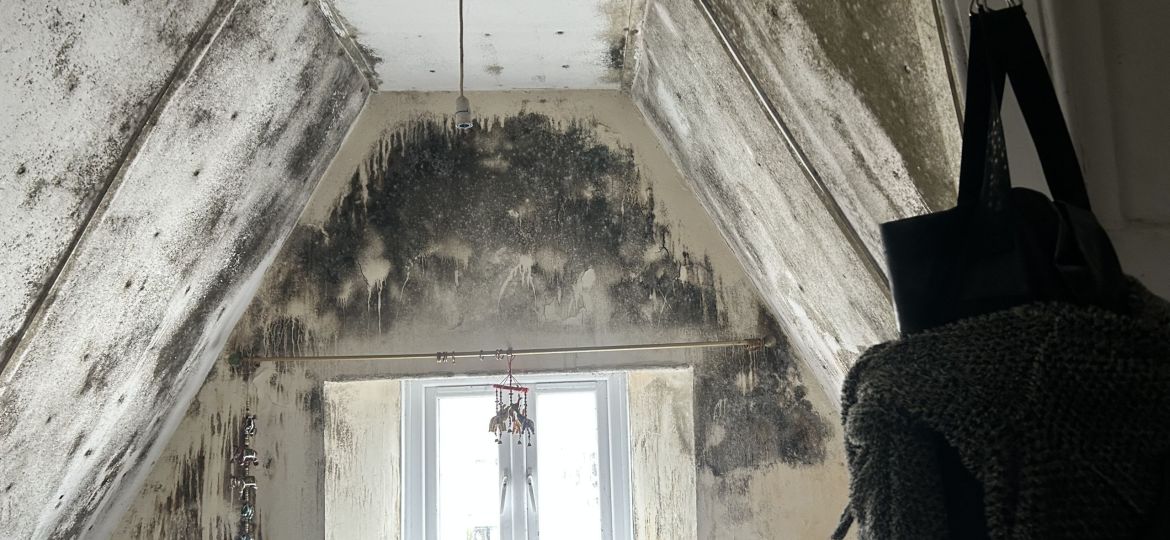
The legal landscape for private landlords has completely transformed. with the Renters Rights Act property management is no longer about just fixing issues when you get round to it.
There are now strict legally mandated compliance procedures.
Through section 60 the strict requirements of Awaab’s Law are being integrated into private tenancies. When Damp or Mould issues are seen or reported there will be a framework requiring you to act fast.
Wiping away Mould will no longer be an acceptable fix. Accurate diagnosis of the cause, removal of the root problem and all associated symptoms will be a minimum requirement.
Landlords, letting agents and property managers will need to be proactive and accurate records will be need to be maintained for both reporting and remedial actions.
We can help. Below is an outline inspection protocol which will help install a method of inspection and record keeping to ensure compliance.
Of course we can complete inspections for you and if you would like a formatted PDF checklist complete our survey request form adding ‘PDF’ and we will email a copy to you.
📋 The 2026 Landlord’s Mould & Damp Compliance Checklist
Ensure Tenant Health, Protect Your Property, and Stay Compliant with Awaab’s Law.
As a landlord, managing damp and mould is no longer just a maintenance issue—it is a strict legal requirement. Under updated UK regulations and Awaab’s Law, landlords must investigate and address damp and mould hazards within tight, legally mandated timelines.
Use this quick checklist to inspect your rental properties, protect your investment, and ensure full compliance.
🔍 Section 1: The Moisture Hunt (Keep Water Out)
Before fixing internal issues, ensure structural defects and plumbing/drainage issues aren’t letting moisture in.
- Gutters & Downpipes: Are they clear of leaves, debris, and leaks? (Blocked gutters are a primary cause of penetrating damp).
- Brickwork & Mortar: Are there any visible cracks in the mortar or pointing that could allow rainwater to soak through?
- Appropriate Finish: Is there a render and if so is it appropriate for the type of construction, are there cracks or ‘blown’sections? Is it painted with a suitable product and is this in good order?
- External Water Repellent: Has the brickwork been treated to prevent porous bricks from absorbing driving rain?
- Damp Proof Course (DPC): Is the external ground level or garden soil bridging the DPC (less than 150mm below the internal floor level)?
- Window Seals: Is the external sealant around window and door frames intact, or is it cracked and letting in moisture?
- Pipework: Are all internal plumbing joints dry and free from slow, hidden weeping leaks behind kitchen and bathroom units?
- Bathroom/kitchen: Are tiles or boards sealed correctly, are shower screens or curtains effective? Do appliances have evidence of leakage?
💨 Section 2: Ventilation & Extraction (Let Moisture Out)
Daily living creates gallons of airborne moisture. It must have an escape route.
- Bathroom Extraction: Is there an electric extractor fan installed? Does it turn on automatically with the light or humidity levels, and does it have an over-run timer? Would a continuous extract function be more appropriate?
- Kitchen Extraction: Is there a dedicated extractor fan or cooker hood that vents externally (not just recirculating air back into the room)?
- Trickle Vents: Are trickle vents fitted on windows, and are they left open to allow continuous, passive air exchange?
- Airflow Gaps: Is there a 10mm–15mm gap at the bottom of internal doors to allow air to circulate freely through the property?
- Active Ventilation: If the property has a history of heavy condensation would a Positive Input Ventilation (PIV) system installed to continuously displace damp air be a benefit?
- Dehumidifiers: Where washing has to be dried inside has a dehumidifier been provided?
🌡️ Section 3: Heating & Insulation (Prevent Cold Spots)
Mould predominantly grows where warm, wet air hits a cold surface. Eliminating cold spots stops mould.
- Heating System: Is the heating system fully functional and capable of maintaining a consistent, energy-efficient baseline temperature across all rooms? Is there sufficient heating?
- Loft Insulation: Is the loft insulated to modern standards (at least 270mm) to prevent warm air from escaping and causing ceiling condensation?
- Wall Cold Spots: Are external-facing walls excessively cold to the touch? (Consider thermal dry-lining or advanced insulating additives).
- Pipework: Are all internal cold-water pipes insulated, where they may reduce temperatures, such as when they pass through a cupboard?
📜 Section 4: Legal & Compliance Audit (Awaab’s Law)
Protect your business from heavy penalties, tenant compensation claims, and legal action.
- Report Logging: Do you have a formal system to immediately log and date-stamp every report of damp or mould made by a tenant?
- Strict Timelines: Are you prepared to inspect the property within the legally required window after receiving a complaint?
- Formal Written Report: Do you provide tenants with a written report detailing the findings, root causes, and planned remedial actions?
- Source-Focused Action: Are you treating the cause of the damp (e.g., repairing insulation or ventilation) rather than just wiping away the symptomswith standard bleach?
🛡️ Facing a Mould Issue Right Now?
Don’t guess the cause or risk non-compliance. Condenex provides independent landlords, letting agents, and property managers across Somerset & Dorset with professional, long-term solutions.
If you haven’t the time or resources to complete the above on a regular basis then talk to us today.
- Free Property Surveys & Written Reports
- Professional PIV & High-Performance Extraction Installation
- Eco-Friendly Chemical Clean Downs & Anti-Mould Redecoration
Get in touch today to secure your property portfolio:
📞 0800 0740 586 | 📧 info@condenex.co.uk | 🌐 www.condenex.co.uk