

What does compliance mean for landlords and letting agents?
The word “compliance” is used constantly in lettings, but it has a simple core. Compliance means meeting your legal duties as a landlord or agent, doing so within the required timescales, and being able to prove it. The last part matters most. When a tenant complains, a council investigates or a case reaches court, what counts is the evidence you can show: dated certificates, logged repair requests, recorded responses and clear communication.
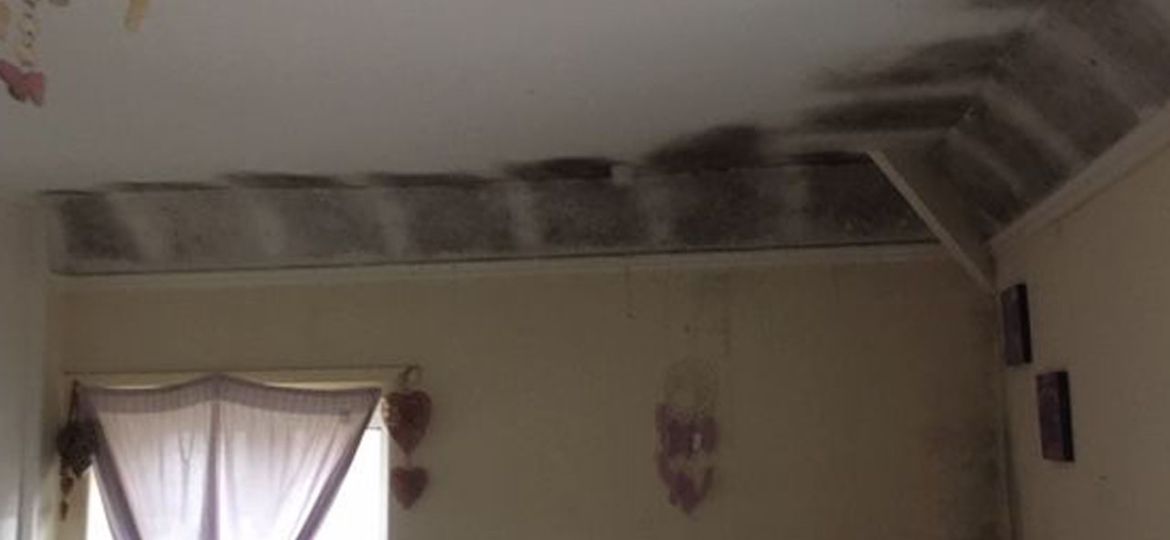
Since Awaab’s Law came into force and the Renters’ Rights Act 2025 began to take effect, damp and mould have moved from being a routine maintenance issue to a headline compliance risk. This article explains what each change does and ends with a practical list of compliance activities.
Why damp and mould are in the spotlight
Awaab’s Law is named after two-year-old Awaab Ishak, who died in December 2020 from a respiratory condition caused by prolonged exposure to mould in his family’s social housing flat in Rochdale. His parents had complained repeatedly over several years without effective action. The law is designed to stop that kind of delay happening again.
What Awaab’s Law does
Awaab’s Law was created by the Social Housing (Regulation) Act 2023 and is set out in the Hazards in Social Housing (Prescribed Requirements) (England) Regulations 2025. It came into force on 27 October 2025. It does not create brand-new repair duties. It puts fixed deadlines on duties landlords already have, and it makes those deadlines enforceable by tenants through the courts as a breach of contract.
Who it covers today
Awaab’s Law currently applies to social landlords only (councils and housing associations). It does not yet apply to privately rented homes.
The deadlines
- Emergency hazards: investigate and make safe within 24 hours of becoming aware.
- Significant damp and mould: investigate within 10 working days of becoming aware.
- Written summary: give the tenant a written summary of findings within 3 working days of the investigation concluding.
- Safety work: complete within 5 working days of the investigation concluding.
- Preventative work: begin within 5 working days of the investigation concluding, or as soon as reasonably practicable and within 12 weeks if that is not possible. Then complete it within a reasonable time.
- Alternative accommodation: if safety work cannot be completed in time, the landlord must arrange suitable alternative accommodation at its own cost.
Awareness does not need a formal complaint. A phone call, text, email or an observation by a visiting contractor can start the clock.
Where it is heading
Phase 2 starts on 30 November 2026 and adds excess cold and heat, falls, structural collapse, fire and explosions, electrical hazards and hygiene. Phase 3 is planned for 2027 and will cover the remaining Housing Health and Safety Rating System hazards, apart from overcrowding.
What the Renters’ Rights Act 2025 does
The Renters’ Rights Act reforms private renting and creates the route for Awaab’s Law to reach private tenancies. It is being introduced in phases.
Phase 1: 1 May 2026
Section 21 “no-fault” evictions were abolished, fixed-term tenancies became periodic, rent increases are limited to once a year, bidding above the advertised rent is banned and advance rent is capped at one month. Tenants can leave on two months’ notice. In practice this makes it easier for tenants to raise issues such as damp and mould without fear of losing their home, and it makes landlords’ responses easier to scrutinise.
Phase 2: from late 2026
- PRS Database: a national register of landlords and rented properties. Landlords will need to register and provide safety information such as gas safety, electrical (EICR) and EPC certificates. Some commentators quote a fee of £65 per property per year. Registration is also expected to affect access to certain possession grounds.
- Landlord Ombudsman: a mandatory redress scheme for all private landlords, giving tenants a free route to complain about issues such as delayed repairs. Mandatory membership is currently expected from 2028, with no confirmed date.
Phase 3: Awaab’s Law and a modernised Decent Homes Standard
Sections 60 and 61 of the Act give the government power to extend Awaab’s Law to private tenancies and to certain licensed accommodation. The detail will be set in regulations. A government consultation published on 9 October 2026 closes on 18 December 2026. It proposes starting, as in social housing, with damp and mould and all emergency hazards, and offers options for private-sector timescales, such as investigating significant hazards within 5, 10 or 15 working days. The consultation names 2027 as the earliest feasible start, and no date is confirmed. Everything on private-sector timescales is a proposal, not law.
How the two fit together for damp and mould
- Awaab’s Law sets the timescales and the enforcement model. It applies now to social housing and is planned for private lettings.
- The Renters’ Rights Act gives the power to extend those timescales to private landlords, and adds the database and ombudsman that make non-compliance visible.
- Private landlords already must keep homes in repair (section 11, Landlord and Tenant Act 1985) and fit for human habitation (section 9A). The consultation states it does not expect Awaab’s Law to add new repair duties, only timescales and process.
- Both rely on evidence. Without records, a landlord cannot show they acted in time.
Key takeaways
- Awaab’s Law is in force for social housing only. It is not yet law for private landlords.
- Private landlords are expected to be brought in through regulations, with 2027 the earliest feasible start. The timescales are still under consultation.
- The underlying duties (repair, fitness for habitation, hazard-free homes) already apply to private landlords today.
- Speed is now the test. Deadlines run from when you become aware, not from when a formal complaint arrives.
- Damp and mould must be treated as a health hazard, not a cosmetic or lifestyle issue.
- Registration and redress (PRS Database and Ombudsman) will make records visible to tenants and councils.
- Records are the proof of compliance. If it is not logged and dated, it is hard to demonstrate.
Compliance activities: a practical checklist
The following activities reflect current law, the Awaab’s Law model for social housing and the direction of travel for private lettings.
- Set up a single log for every repair or hazard report, recording the date and time you became aware, the source (phone, email, text, contractor, inspection) and the property.
- Triage every report on the day it arrives, deciding whether it is a possible emergency, a possible significant hazard or routine, and record the reasoning.
- Treat a possible emergency hazard as a 24-hour job: investigate and make safe within 24 hours, including weekends.
- Investigate damp and mould reports promptly, using a competent person, and aim for the 10 working day benchmark used in social housing.
- Give the tenant a written summary of findings, the action you will take and target dates, within about 3 working days of finishing the investigation.
- Complete safety work quickly (5 working days is the social housing benchmark) and start preventative work within about 5 working days where possible.
- Identify and fix root causes, such as leaks, penetrating or rising damp, ventilation, heating and insulation, rather than only cleaning or painting over mould.
- Plan for alternative accommodation where the home cannot be made safe in time, and give tenants written safety advice in the meantime.
- Keep a reliable local contractor or damp specialist on call who can respond within the required timescales.
- Keep gas safety, EICR and EPC certificates, smoke and carbon monoxide alarm records and any licences current and easy to find.
- Carry out periodic inspections, with notice, and record condition including signs of damp, condensation and ventilation problems.
- Give tenants clear guidance on how to report problems and how to reduce condensation, without placing blame on them.
- Keep dated records of all communications, photos, reports, quotes, invoices and completion sign-offs for each property.
- Check the current status of the PRS Database and register your landlord and property details when your region opens.
- Prepare for the Landlord Ombudsman by using a written complaints procedure and responding to tenants within set times.
- If you are an agent, confirm responsibilities in writing with each landlord, including who authorises urgent works and spending limits.
- Review insurance, tenancy documents and management procedures against the proposed private-sector timescales once regulations are published.
- Consider responding to the government’s Awaab’s Law consultation before 18 December 2026, and monitor GOV.UK for final regulations.
Important notes
This article is general information, not legal advice. Dates and proposals, especially for private landlords, may change. Several figures (such as the database fee) come from commercial guides rather than government sources, so check GOV.UK before relying on them.