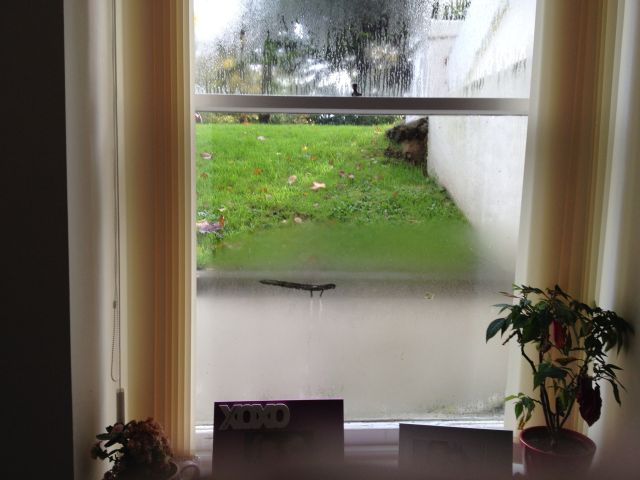
What is condensation?
Air contains water vapour in varying quantities, its capacity to hold this vapour is related to its temperature – warm air holds more moisture than cold air. When moist air comes into contact with either colder air or a colder surface, the air is unable to retain the same amount of moisture and the water is released to form condensation in the air or on the surface.
Condensation is generally noticeable where it forms on non-absorbent surfaces (i.e. windows or tiles) but it can form on any surface. It often results in black mould growth on walls and other surfaces or you can see actual water droplets. It is usually worse in corners, on or near windows, in or behind wardrobes and cupboards and on North facing walls. Condensation gets worse when the house is colder, whether it is raining or dry and it does not leave a ‘tide mark,’ unlike other causes of damp. In some cases, condensation may be long term, but intermittent, forming only at certain times of the day or night. In these cases, the only sign of condensation may be mould growth, as the moisture may have evaporated by the time moisture measurements are taken.
One should also be aware that the problem can occur well away from the site of most water vapour production. E.g. water vapour produced in the kitchen may diffuse through the house into a cold bedroom where it will condense on cold walls.
Mould Growth
Mould growth will appear on any damp surfaces such as plaster, wallpaper and timber and is unacceptable because of appearance (unsightly growths of various colours – greens, yellows, pinks, black, grey or white), odour (musty and damp), and fears of health and hygiene considerations.
The main requirement for the development and growth is a source of moisture although food, oxygen and a suitable temperature are also important. It is available water which is critical to mould development and different materials at the same moisture content often have different water availability.

How Do I Solve the Problem?
There are four main steps that will help you reduce condensation in your home.
Ventilate your home – let the wet air out and continuously exchange the air within
- Install a positive input ventilation system (PIV).
- Replace your present extractor fans with more efficient units.
- Keep a small window or vent open at opposite ends of a property on all floors, BE CAREFUL not to over ventilate. Too much ventilation can significantly reduce temperatures leading to more areas that condensation can occur.
- More ventilation is required in ‘wet’ rooms like the kitchen and bathroom there should be additional extraction facilities installed in these areas.
- Use extraction fans where fitted, for at least 20 minutes after having a bath or a shower – long enough to dry out the room and keep the door closed during this period.
- Ventilate cupboards and wardrobes. Avoid overfilling as this stops the air circulating. Where possible, position wardrobes and furniture against internal walls.
- Ensure that lofts have ventilation, usually via soffit vents.
- Don’t cover external airbricks or vents in boarded up fireplaces.
Produce less moisture
- When cooking, cover pans and turn down to simmer. Do not leave kettles boiling.
- Dry washing outdoors on a line if possible, or put it into the bathroom with the door closed and the window open or the fan on.
- If using a tumble dryer, make sure you vent it outside (unless it is a self-condensing type) Avoid drying washing on a radiator or in front of a radiant heater.
- Avoid using paraffin and portable bottled gas heaters as these heaters introduce a lot of moisture into the air.
- After baths or showers return the wet towel to the bathroom don’t leave in a bedroom.
- When people come in with wet coats, hang them outside the living area to dry.
- Check for leaking plumbing.
Heat your home a little more
- In cold weather, the best way to avoid condensation is by keeping background heating on all day, even when no one is at home.
- If you don’t have heating in every room, then open doors to these rooms and let some heat in and allow the air to circulate.
- It is advisable to heat rooms to at least 10°C even when not occupied. Living rooms in use should be heated to about 20°C.
Insulation and draft proofing
- Insulate your loft.
- Insulation and draught proofing will help keep your home warm and will also cut fuel bills. When the whole home is warmer, condensation is less likely.
- Loft and wall insulation are the most effective forms of insulation. Draught proof windows and external doors without covering up vents.
- On solid external walls the application of a water repellent can keep masonry drier which will prevent the wall from being colder
Facts and figures
The most obvious sign of condensation is going to be water streaming down the inside of windows, particularly bedroom windows in the morning (even on walls).
Condensation is an increasingly serious problem in dwelling houses and offices. It is reported to affect over 50% of Buildings in the UK.
Living in a damp house isn’t healthy and can particularly affect people with rheumatism, bone disorders and breathing problems. The dusty substance which you see as mould is in fact millions of tiny spores. These commonly irritate asthma sufferers and cause allergic reactions with symptoms similar to hay fever.
Water vapour is produced in relatively large quantities from normal day to day activities – a 5-person household puts about 10 kg of water into the air every day (without taking into account any heating).
Up until the middle/late part of the twentieth century, most houses had high natural ventilation as the level of home insulation was low. Conservation then became popular and natural ventilation was greatly reduced by the introduction of double glazing, draught excluders, fitted carpets (which prevent air movement up through suspended wooden floors) and the removal of open fire places with the introduction of central heating.
Air is saturated when it cannot contain any more water vapour at the existing temperature; under these conditions it is said to have a relative humidity (RH) of 100%. Mould will develop on leather at 76% RH. It will not develop on wood below 85% RH nor on cotton or glass below 96% RH.
Moisture can also be drawn from the structure of the building into the internal air; from below the floor or through the walls/ceilings this additional moisture can exasperate a condensation problem.
Problems with the structure of the building can mean that its moisture content is unnecessary high. This can either be due to the method of original construction or as a result of structure failures. Older houses may not have a damp proof course (DPC) which prevents soil moisture from rising up into the living areas, lack of a DPC can occur in walls or under solid floors.

Read our news articles for the latest information in condensation control, equipment, products and more.
Learn how anti-mould paint and anti-condensation paint work, what they are made of, and when to use each to stop…
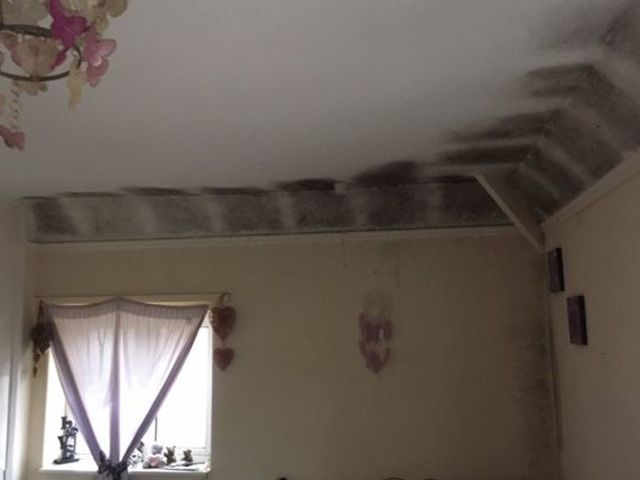
What does compliance mean for landlords and letting agents? The word “compliance” is used constantly in lettings, but it has…