

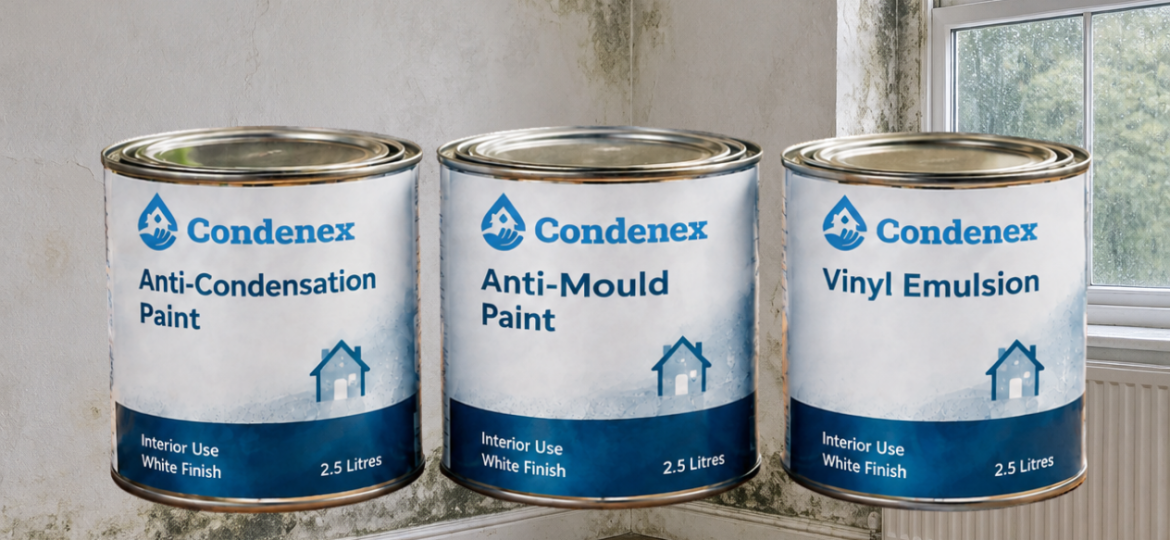
Learn how anti-mould paint and anti-condensation paint work, what they are made of, and when to use each to stop damp walls and black mould.
Anti-mould paint and anti-condensation paint sound interchangeable, but they solve different problems. Anti-mould paint protects the paint film from fungal growth, while anti-condensation paint tries to stop water forming on cold walls and ceilings in the first place. This guide explains how each works, how their components behave, and when to use them to prevent condensation, damp and black mould.
How does anti-mould paint work?
Anti-mould paints are ordinary acrylic emulsions with a fungicide (biocide) added. As the paint dries, the biocide is trapped throughout the film, so any mould spore that lands on the surface meets an unfriendly coating rather than a food source. The dried film is typically classed as a treated article, and good products are designed to stay tough and resist cracking, peeling and blistering for years. Many carry a multi-year black mould guarantee and, in the UK, biocidal approval from the Health and Safety Executive.
The components are straightforward: an acrylic binder that forms a tough, scrubbable, moisture-resistant film; pigment for opacity; and the biocide that suppresses fungal growth on the surface. Because the paint resists moisture and dirt pick-up, it also removes the conditions that mould needs.
How does anti-condensation paint work?
Condensation forms when warm, humid air meets a surface colder than its dew point. Anti-condensation paint tackles the cold surface. These are typically waterborne coatings built on an acrylic or vinyl binder with mineral fillers or hollow microspheres of glass or ceramic. These fillers conduct heat poorly, so the coating acts as a thin insulating layer that keeps the wall surface warmer and above the dew point, delaying condensation. Many are also microporous, so moisture within the wall can still evaporate, and they can be used as a primer under a decorative coat or as a fine-textured matt finish.
The coating usually contains a preservative to protect the dried film from fungal growth, so it gives some mould protection as a secondary benefit. Two to three coats are typically recommended for the insulating effect to work properly.
How should you prepare walls before painting?
Both types of paint only work as well as the surface beneath them. Damp plaster traps moisture behind the film, which can cause blistering and peeling and gives mould the water it needs to keep growing underneath. A damp wall is also colder, which undermines the insulating effect of anti-condensation paint. Dirt, grease and soap film stop the paint bonding properly, and any mould spores left behind can carry on growing beneath the coating, so surfaces should be cleaned, treated and left to dry completely before painting.
What anti-mould and anti-condensation paint cannot do
- Neither paint fixes rising damp, penetrating damp or leaks. They treat the surface, not the source of the water.
- Existing mould must be removed first with a mould wash or remover; where mould is excessive, a HEPA vacuum should also be used to capture loose spores and debris before washing. Otherwise, growth can continue beneath the paint.
- Overpainting an anti-mould paint with ordinary paint stops it working, and overcoating an anti-condensation paint with a standard emulsion reduces its insulating and moisture-absorbing ability.
- Ventilation and heating still matter. Anti-condensation paint complements moisture control rather than replacing it.
Which paint should you choose?
Use an anti-mould paint when the surface is prone to damp and you want the paint film itself to resist fungal growth. Use an anti-condensation paint where cold walls or ceilings are the cause. In many homes the sensible answer is both: treat the mould, address ventilation and moisture, and choose the coating that matches the problem.
Frequently asked questions
Does anti-mould paint kill existing mould?
No. Anti-mould paint prevents growth on the painted surface. Existing mould should be cleaned off and treated before painting.
Can anti-condensation paint stop damp?
It only helps with surface condensation caused by cold walls. It will not cure rising damp, penetrating damp or leaks.
Can I use both paints together?
Yes, but check the manufacturer’s guidance. Covering an anti-condensation paint with a standard emulsion reduces its insulating effect, so use a compatible anti-mould topcoat if needed.